The Brewery That Came Back from the Dead: Ohmine Shuzou's Second Life
From a 55-year silence to Michelin tables and Davos — the extraordinary resurrection of Ohmine Shuzou and the sake that carries its soul.
A Silence That Lasted Half a Century
Drive to the westernmost edge of Japan's main island, past the limestone karst of the Akiyoshidai Plateau — one of the most ancient landscapes on earth, shaped over 300 million years — and you will arrive in Mine City, Yamaguchi Prefecture. Here, beneath open skies and beside turquoise spring waters, sits a brewery that refused to stay buried.
Ohmine Shuzou's story is not a smooth, unbroken line from tradition to prestige. It is something rarer and more moving: a story of death, of long silence, and of one man's conviction that the past could be reclaimed — and made better.
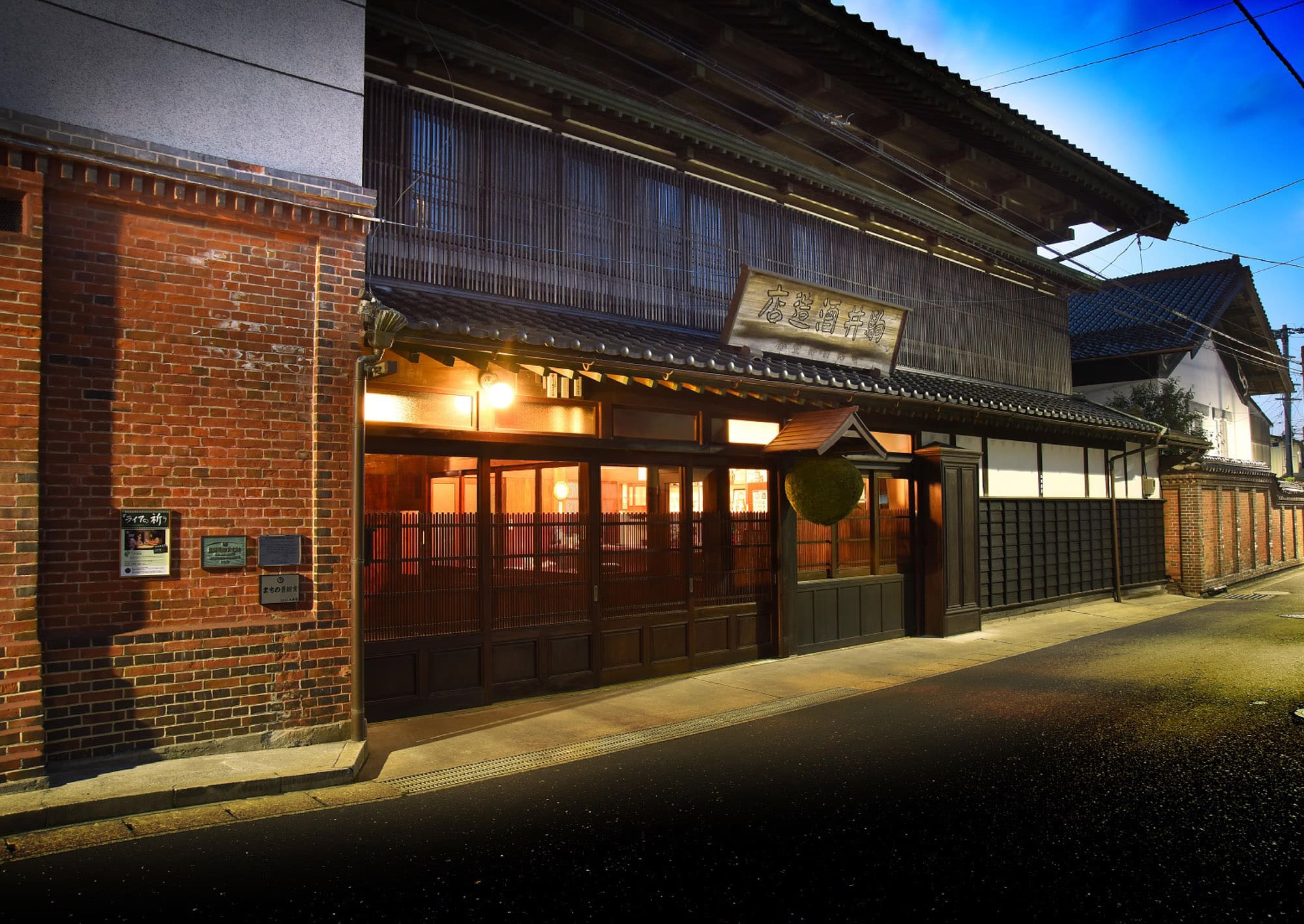
The brewery was founded in 1822, during the Bunsei era of the Edo period, when Mine was a quiet hamlet surrounded by rice paddies and rolling hills. For more than a century, it produced sake from the land, for the people of the land. Then, in 1955, the doors closed. Ohmine Shuzou did not merely pause operations — the brewery would later describe that year as its death.
For fifty-five years, the sakagura sat empty. The equipment gathered dust. The lineage broke. While Japan's post-war economy surged forward and the sake industry contracted from thousands of breweries to hundreds, the old Ohmine kura remained a relic.
A Son of Mine Returns
The resurrection of Ohmine Shuzou required a particular kind of stubbornness — the kind that only comes from love of place. That stubbornness belonged to Takeshi Akiyama, whose grandfather had been forced to wind up the business half a century before. Akiyama had left Yamaguchi and built a career as an architect in New York, acquiring the eye of someone trained to see structure, proportion, and purpose. He returned home with a mission that went beyond nostalgia.
His vision was practical as much as it was sentimental: to revitalise the local rice farming community and prove that a small regional industry could carry economic weight both in Japan and abroad. In 2010, he reopened the brewery with what Japanese food writers would call a mubō — a recklessly bold — ambition. He was tutored by a seasoned sake master and committed to reviving the rich recipe the distillery had developed over three centuries, using local rice and the same spring water that had always flowed beneath these hills.
But Akiyama was not simply reconstructing the past. He was an architect. He understood that form shapes perception, and he set out to challenge every visual assumption the sake world had ever made.
Against the Sake World
The battle cry at Ohmine Shuzou is, by their own declaration: "Against Sake World." In a market defined by dark glass, brush-script labels, and the impenetrable customs of toji culture, Akiyama commissioned Stockholm Design Lab to create packaging that would express the exclusivity of a limited-volume product for an international market. The result was a sleek, white bottle bearing only a minimal illustration of rice grains — a design so unexpected it earned its own international press coverage and design awards.
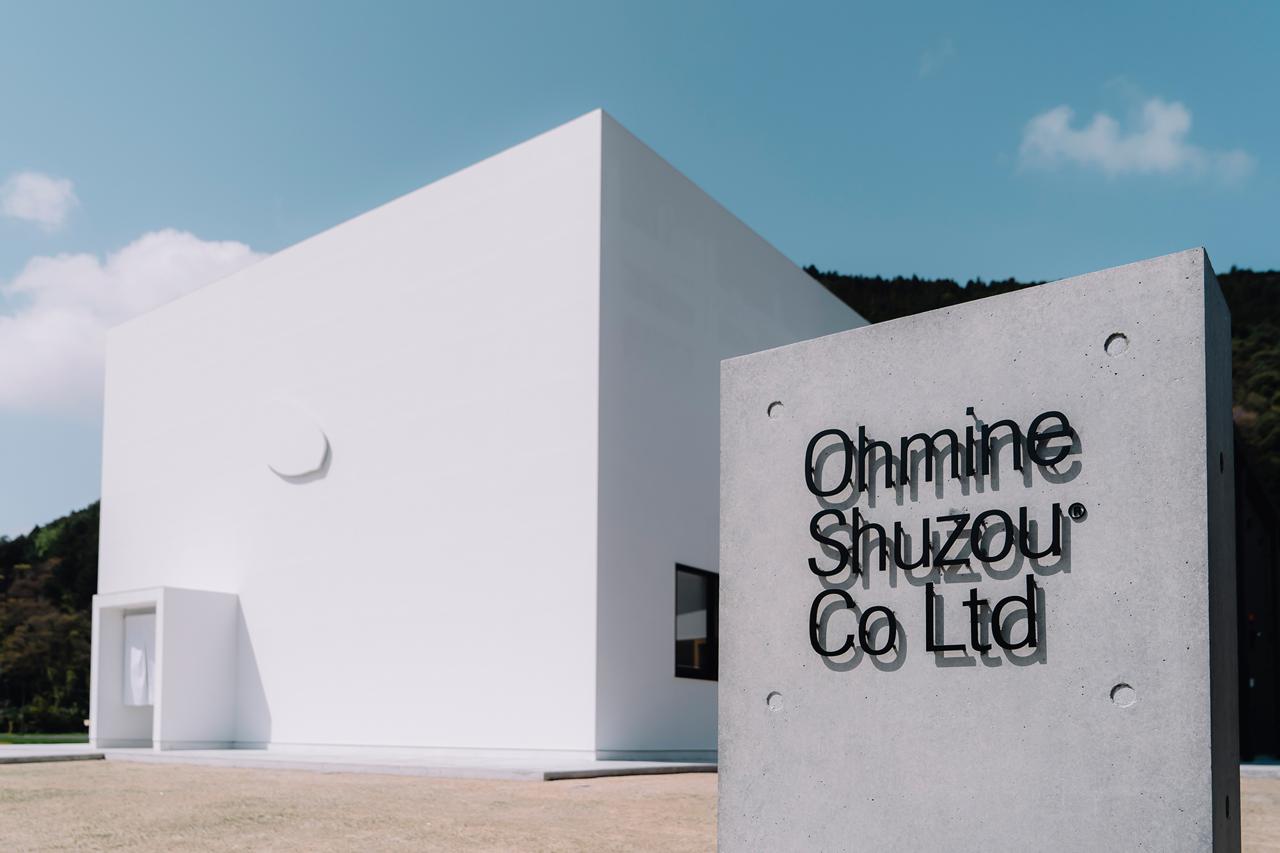
In April 2018, a new brewhouse was unveiled near the Akiyoshidai Plateau — its snow-white walls, by no coincidence, the colour of polished rice. The building became a destination in itself, drawing visitors to an on-site café where sake flights, coffee, and desserts are served against a backdrop of mountain and field.
The strategy worked at every level. Ohmine sake reached Michelin three-star restaurant tables. It reached the tables of world leaders — in 2013, the Japanese government served it at the World Economic Forum Annual Meeting in Davos, Switzerland. It earned a devoted following among a new generation of Japanese drinkers, particularly young people and women who had never seen sake presented this way before.
The Philosophy in the Glass
Behind the striking exterior, Ohmine's approach to brewing is guided by a quieter conviction: "Respect culture and tradition to the utmost, and use contemporary techniques to create sake that our predecessors could not."
That begins with water. The brewery's shikomi-mizu — brewing water — is drawn from Beppu Benten Pond, a cobalt-blue spring that percolates up through the limestone of the Akiyoshidai Plateau. Known locally as the Water for Gods, it is fabled to extend life. Practically speaking, its journey through ancient karst rock infuses it with calcium that supports fermentation even at low temperatures, giving Ohmine's sake a clean, pure character free of unwanted flavours. Every bottle produced at Ohmine contains this water, and its mineral signature is unmistakable.
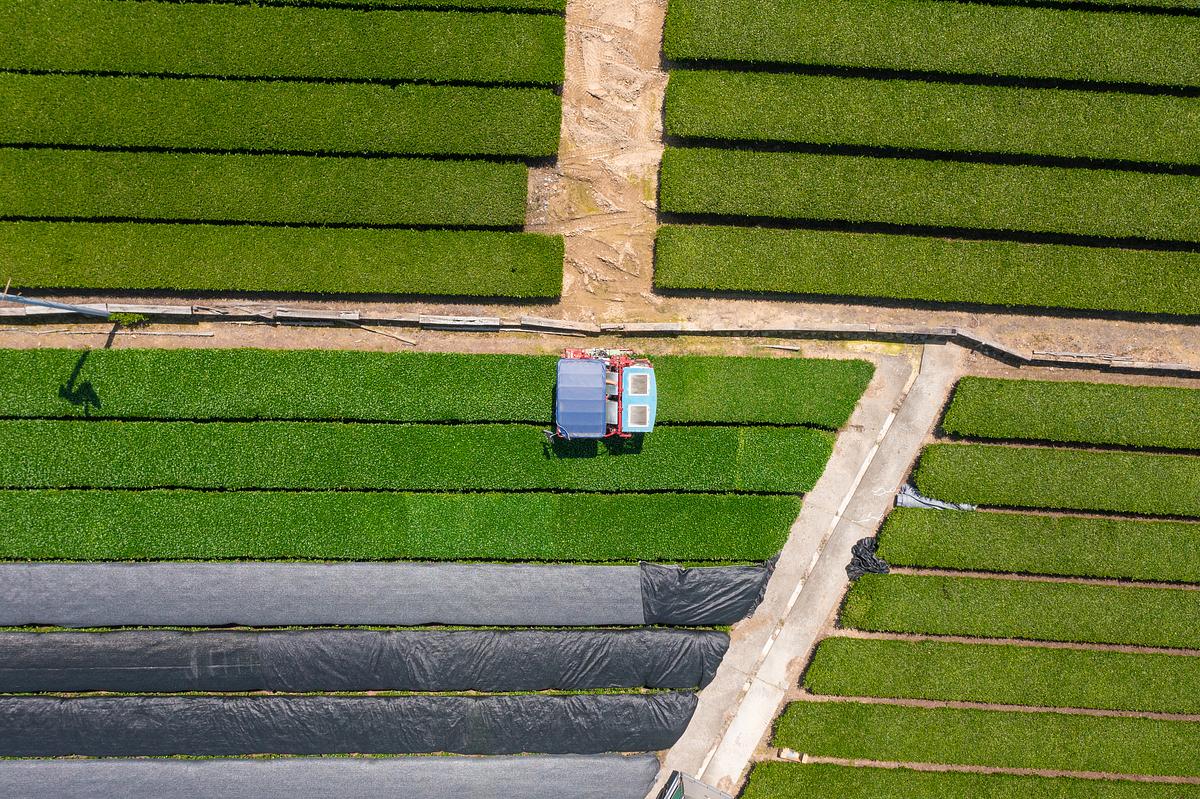
The rice is Yamada Nishiki — regarded as the finest sake rice in Japan, grown in contracted farms around Mine City without additives. Ohmine cultivates some of it on paddies directly beside the brewery. The label system is disarmingly transparent: the number of grains on the label corresponds to the polishing ratio. One grain indicates a polish of 29% or below. Two grains, 30–49%. Three grains, 50% and above. Classification, made legible at a glance.
The entire brewing process is completed by hand. Young brewers — the workforce at Ohmine skews heavily in its twenties and thirties — operate without the rigid seasonal cycle that governs most traditional breweries.
Three Grains: The Soul of Ohmine
The Ohmine 3 Grain Yamadanishiki is the brewery's standard expression — brewed year-round to ensure freshness and accessibility, and the truest distillation of what Ohmine stands for. At 50% rice polishing, it meets the technical threshold of Junmai Daiginjo. Yet, in characteristic defiance of convention, Ohmine does not designate it as such. They would rather you simply drink it.
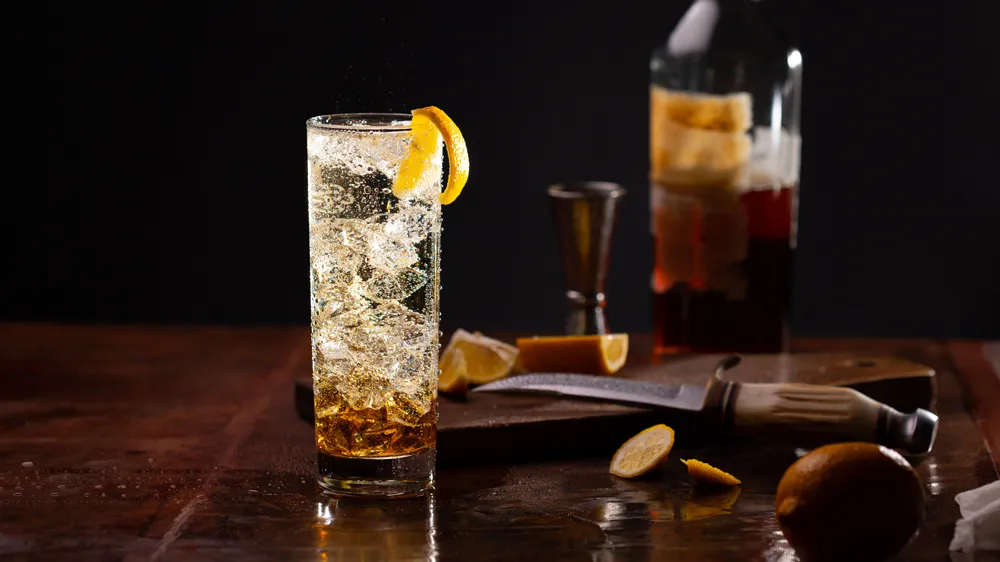
And when you do, the landscape of Mine City arrives in the glass. The first impression is of cool greenery — the specific vegetal freshness of the Akiyoshidai grasslands in early morning. Then comes fruit: muscat grapes and ripe pineapple, bright and juicy, balanced by a thread of mineral precision that speaks directly of Benten water and limestone. The mid-palate deepens, and the finish turns towards something more complex — a sweet coconut note edged with the pleasant, bracing bitterness of matcha.
This is sake that moves like a well-constructed sentence: purposeful, unhurried, surprising only in retrospect. At 14.5% alcohol, it is deliberately approachable — light enough to pour alongside food, complex enough to invite contemplation alone.
What Resilience Tastes Like
There is a Japanese concept, fukkatsu — resurrection — that carries weight beyond mere revival. It suggests not a return to what was, but an emergence of something new from the ruins of what was lost. Ohmine Shuzou is fukkatsu in its purest expression.
A grandfather shuttered the doors. A grandson walked back through them with a New York architect's eye, a deep reverence for the land, and the audacity to declare war on an entire industry's complacency. Fifty-five years of silence became the foundation for something the original brewery could never have imagined.
In every bottle of Ohmine 3 Grain Yamadanishiki, that entire arc — 1822, the long dark, 2010, and everything since — is present. The water that flows through 300 million-year-old rock. The rice grown a few fields from where the sake is brewed. The hands of young brewers who chose this place, this craft, this particular act of renewal.
Some sake tells you where it comes from. Ohmine tells you why it matters that it came back at all.