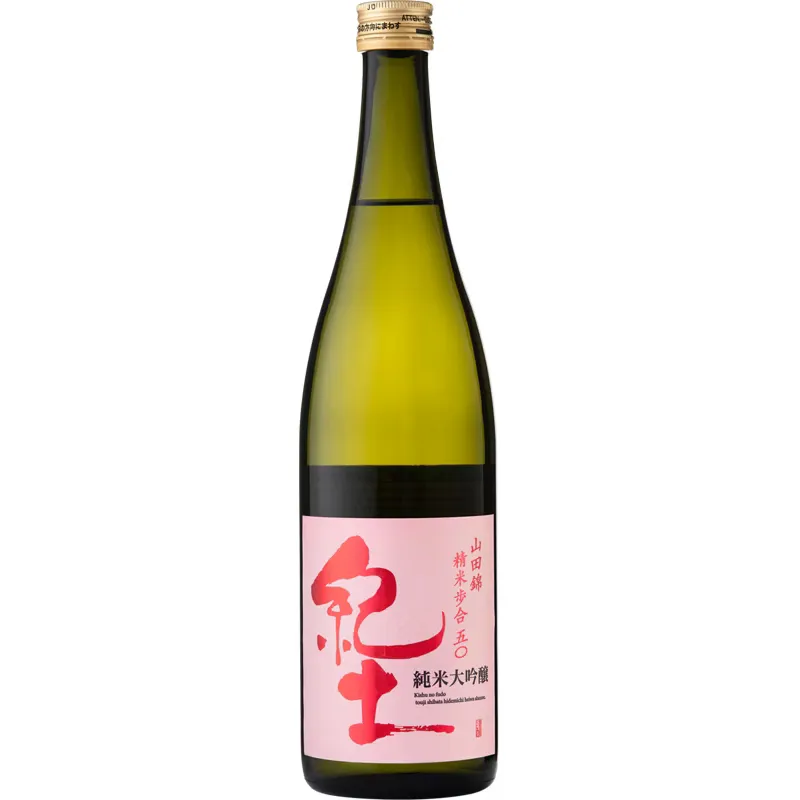
KID Junmai Daiginjo
With the goal to create the new standard for next generation Sake in Japan, Heiwa brings us “KID” Junmai Daiginjo.
Aromas of strawberry, cotton candy and mango give way to a soft, yet vibrant sensation on the palate. “KID” Junmai Daiginjo has well balanced acidity that gives way to a clean finish.
KID Junmai Daiginjo
With the goal to create the new standard for next generation Sake in Japan, Heiwa brings us “KID” Junmai Daiginjo.
Aromas of strawberry, cotton candy and mango give way to a soft, yet vibrant sensation on the palate. “KID” Junmai Daiginjo has well balanced acidity that gives way to a clean finish.
The Peace Brewery ...
Heiwa Shuzo was founded in 1928 by Tamotsu Yamamoto. A sake brewer since the Edo period, Tamotsu Taniguchi was adopted by his son-in-law to take over the Yamamoto family, which had been a Buddhist temple for generations. At that time, his innate love of sake led him to establish a sake brewery. At that time, the name of the temple was "Muryosan Choganji", which is why it is still called "Choganji" today. During World War II, as the war intensified, the government ordered us to suspend production.
Even after the war, we were denied permission to resume our brewing license. Yasumasa, the second-generation owner, traveled to the National Diet to deliver a petition speech demanding the reopening of the suspended brewery. He passionately expressed the frustration of being forced to shut down and his hope to brew sake in the peaceful postwar era. His fervor finally secured permission to restart operations. This aspiration to "brew sake in a peaceful era" became the origin of the name "Heiwa Shuzo" (Peace Brewery).
The Peace Brewery ...
Heiwa Shuzo was founded in 1928 by Tamotsu Yamamoto. A sake brewer since the Edo period, Tamotsu Taniguchi was adopted by his son-in-law to take over the Yamamoto family, which had been a Buddhist temple for generations. At that time, his innate love of sake led him to establish a sake brewery. At that time, the name of the temple was "Muryosan Choganji", which is why it is still called "Choganji" today. During World War II, as the war intensified, the government ordered us to suspend production.
Even after the war, we were denied permission to resume our brewing license. Yasumasa, the second-generation owner, traveled to the National Diet to deliver a petition speech demanding the reopening of the suspended brewery. He passionately expressed the frustration of being forced to shut down and his hope to brew sake in the peaceful postwar era. His fervor finally secured permission to restart operations. This aspiration to "brew sake in a peaceful era" became the origin of the name "Heiwa Shuzo" (Peace Brewery).
How it tastes.
At Nippon Sake Imports, we bring a carefully curated portfolio of Japanese beverages to Canada — with sake at the heart of everything we do. Through deep relationships with artisan producers across Japan, we connect Canadians to bottles that are genuinely difficult to source elsewhere. Our mission is simple: exceptional craft sake, honestly priced.
Nippon Sake.
At Nippon Sake Imports, we bring a carefully curated portfolio of Japanese beverages to Canada — with sake at the heart of everything we do. Through deep relationships with artisan producers across Japan, we connect Canadians to bottles that are genuinely difficult to source elsewhere. Our mission is simple: exceptional craft sake, honestly priced.
More from Nippon Sake
All 18 bottles →